
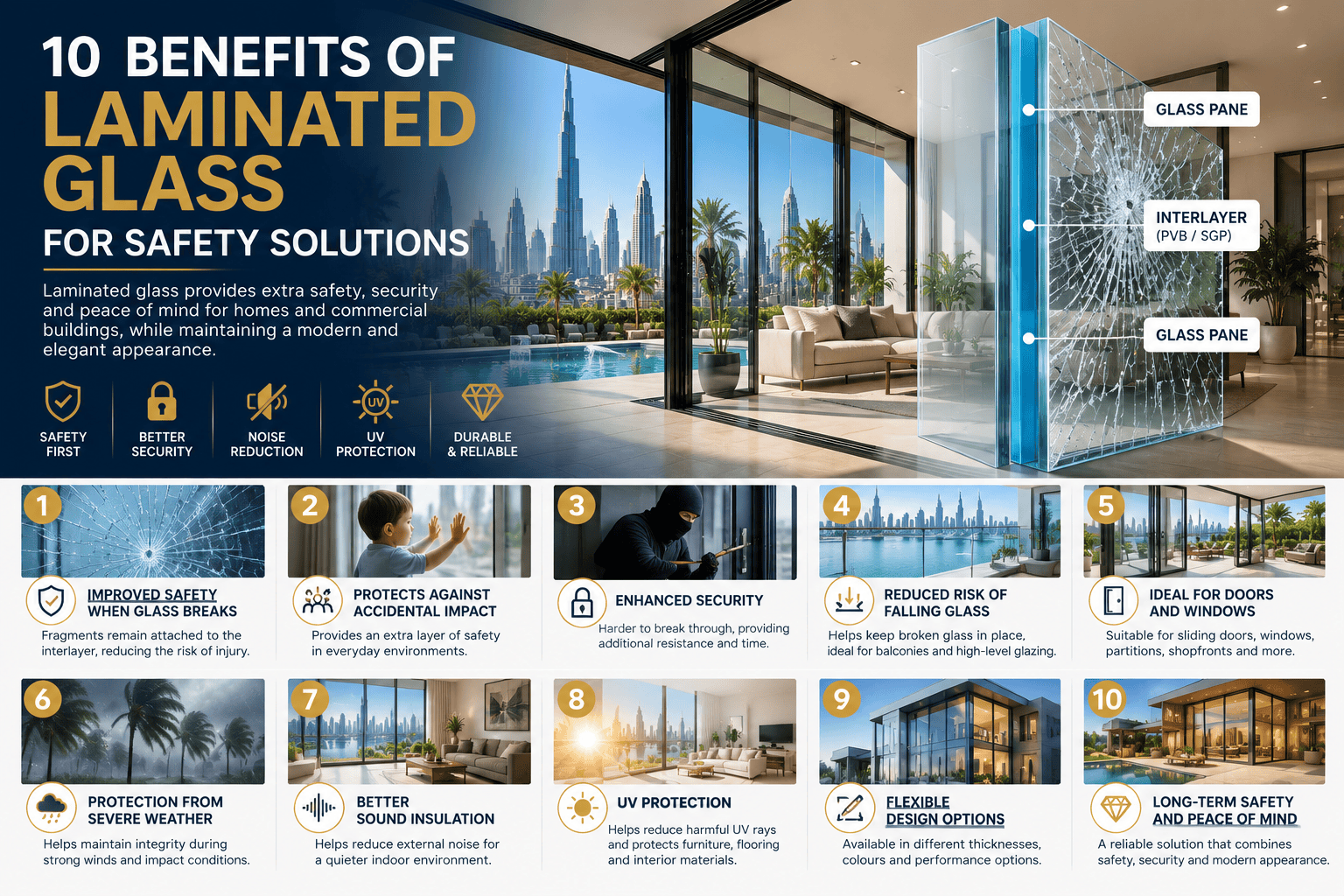
10 Benefits of Laminated Glass for Safety Solutions
Laminated glass is widely used in modern architecture where safety, security, durability, and visual appeal are important. Unlike ordinary glass, laminated glass is made by bonding two or more glass layers together with an interlayer. If the glass breaks, the interlayer helps hold the fragments together rather than allowing them to scatter freely.
From residential windows and doors to commercial buildings, balconies, skylights, and glass partitions, laminated glass can provide an additional layer of protection.
Here are 10 important benefits of laminated glass for safety solutions.
1. Improved Safety When Glass Breaks
One of the main benefits of laminated glass is its behavior when broken.
Instead of breaking and scattering into numerous loose pieces, the glass fragments generally remain attached to the interlayer. This can significantly reduce the risk of falling or scattered glass causing injuries.
2. Helps Protect Against Accidental Impact
Laminated glass provides an additional level of protection in areas where accidental impacts may occur.
It can be particularly useful for doors, large windows, glass partitions, balconies, and other locations where people are frequently close to glass surfaces.
3. Enhanced Security
Laminated glass can make it more difficult for an intruder to create an opening through a glass panel.
Even when the glass is damaged, the interlayer can continue holding the broken glass together. This can provide additional time and resistance compared with conventional single-pane glass.
For higher-security applications, specially designed laminated glass systems can be selected according to the required level of protection.
4. Reduced Risk of Falling Glass
Large glass panels installed above ground level can create additional safety concerns if they break.
Because the interlayer helps hold broken glass together, laminated glazing can reduce the likelihood of large pieces falling away from the frame. This makes it a useful option for applications such as balconies, overhead glazing, façades, and skylights.
5. Excellent for Glass Doors and Windows
Laminated glass can be used in a wide range of residential and commercial applications.
It is suitable for products such as:
- Glass doors
- Sliding glass doors
- Large windows
- Shopfronts
- Glass partitions
- Balcony glazing
- Curtain walls
- Skylights
Its safety characteristics make it particularly useful wherever people are regularly exposed to large areas of glass.
6. Protection From Severe Weather
Laminated glass can provide additional protection in areas exposed to strong weather conditions.
When properly specified and installed as part of a suitable glazing system, laminated glass can help maintain the integrity of the opening if the glass is damaged by windborne debris or other impacts.
The appropriate glass specification should always be selected according to the building, location, and applicable requirements.
7. Better Sound Insulation
Safety isn't the only advantage of laminated glass.
The interlayer can also help reduce the transmission of certain sounds through the glazing. Acoustic laminated glass is specifically designed to improve sound-control performance.
This can make it useful for homes, offices, hotels, restaurants, and buildings located near busy roads or other sources of external noise.
8. UV Protection
Certain laminated glass systems can help reduce the amount of ultraviolet radiation passing through the glazing.
This can be beneficial for interiors containing furniture, carpets, artwork, flooring, and other materials that can be affected by prolonged UV exposure.
The exact performance depends on the glass and interlayer selected.
9. Flexible Design Options
Laminated glass is available in different configurations, thicknesses, colors, and performance specifications.
It can be combined with different glass types and interlayers to achieve specific requirements for safety, security, acoustics, solar control, privacy, or appearance.
This flexibility allows architects and homeowners to incorporate safety glazing without compromising the overall design of a building.
10. Long-Term Safety and Peace of Mind
Choosing the right glazing system is an important part of creating a safe and comfortable building.
Laminated glass combines safety characteristics with other performance benefits, making it suitable for many residential, commercial, and architectural applications.
When correctly specified, manufactured, and installed, it can provide long-term protection while maintaining the clean and modern appearance of glass.
Where Can Laminated Glass Be Used?
Laminated glass can be considered for many applications, including:
- Residential homes
- Luxury villas
- Office buildings
- Commercial storefronts
- Glass balconies
- Glass doors
- Sliding doors
- Skylights
- Glass façades
- Interior partitions
- Hotels and hospitality spaces
The correct glass specification depends on factors such as panel size, location, wind loads, impact requirements, building regulations, and the intended application.
Choose the Right Laminated Glass Solution
Laminated glass offers an excellent combination of safety, security, durability, acoustic performance, and design flexibility. Its ability to keep broken glass attached to the interlayer is one of its most important safety characteristics.
Whether you're designing a new home, upgrading an existing property, or specifying glazing for a commercial project, selecting the appropriate laminated glass system can help create a safer and more comfortable environment.
For professional glass installation, always consult a qualified glazing specialist to determine the appropriate laminated glass specification for your project.